The week of 2/24 to 2/28 was the second full week of teaching with a teaching plan. The topic of this week was on jobs, and the said teaching plan can be found here.
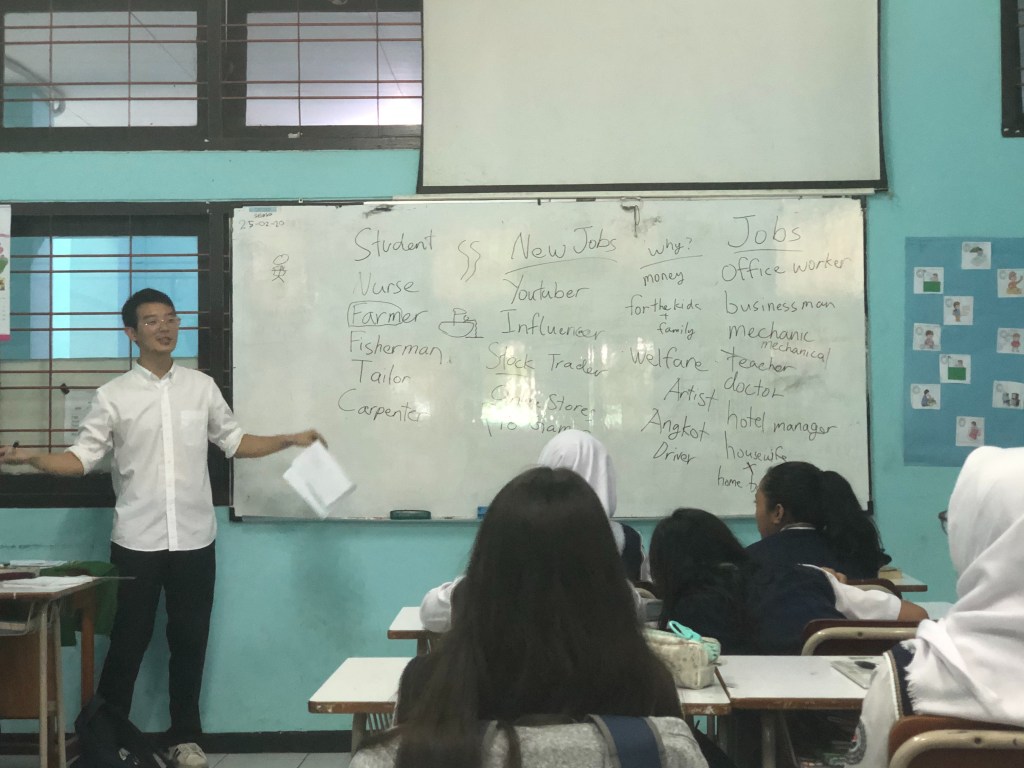
This topic was much harder to teach than the other ones. Personality, Appearance, and Descriptive Text in General has a lot more content and possible topics to talk about. Jobs, on the other hand, is extremely bland in both the eyes of the student as well as the teachers. Most students know words for jobs; they know where these professions work and they know what they do. The issue, then, was on how to keep students engaged on the idea of jobs, as well as how to connect this with the other topics. Since Jobs, Personality, and Descriptive Text were all topics covered in Chapter 7 of the English textbook, I felt it vital to make sure these 3 were connected.
Procedures of Teaching
Teaching Jobs was again split into two days. The first day was used to focus on a list of job names and information the students had to go over. It was imperative that students understood where a job is performed and the act of the job itself in order to connect it with an overarching theme that I wanted the students to understand. After going over the words, I asked students to provide additional words based on what their parents did (do make the topic more personal). All of these words were connected by how I presented them as “important to society and welfare”. I asked students many times what was the “significance” and “role in society” each job played, spending extra time on jobs like “bus driver” and “janitor”. These are infrastructure roles and should be respected, which is a message I tried to pass on to the students.
After, the students were asked to write a few sentences about what they want to do and the social significance of that job. This was to be used in the next class. Finally, a review of the words and the class was given. Since the list of words was large, it took the majority of this class.
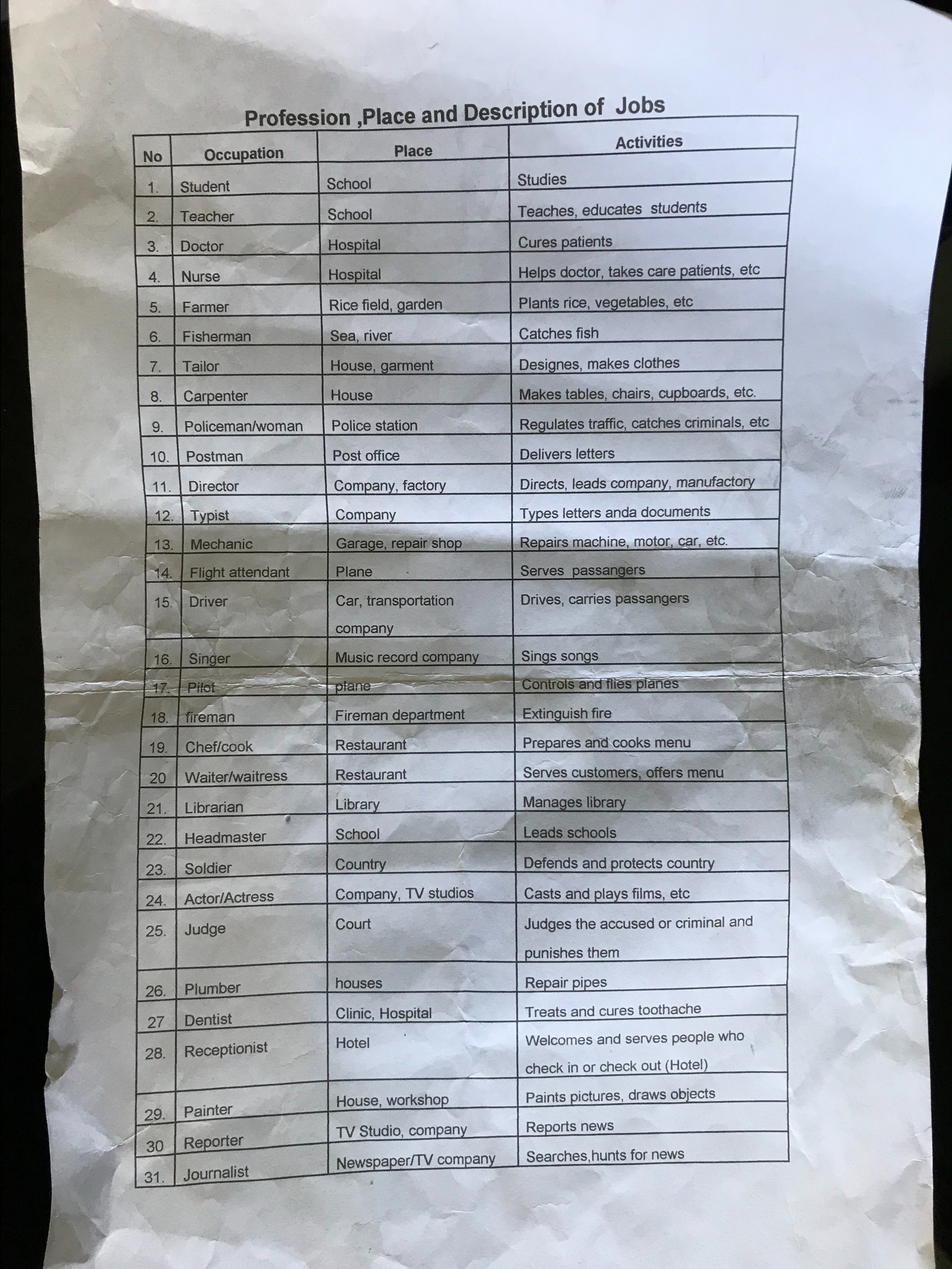
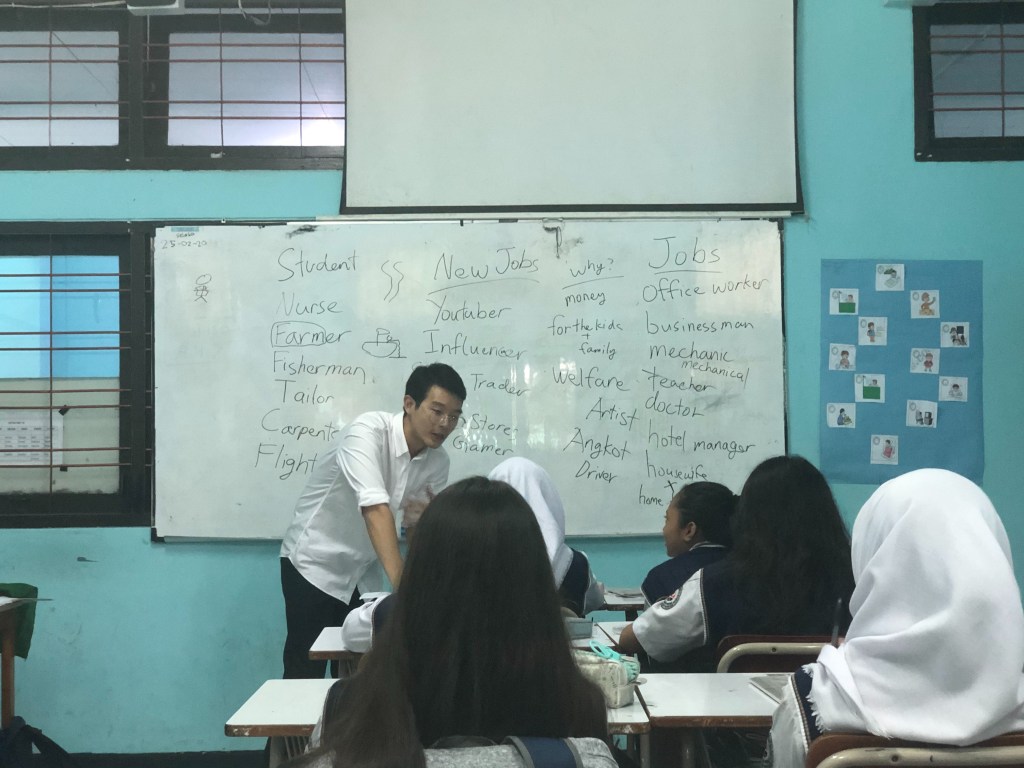
However, those of you with a keen eye could see that I missed out on writing about the charades game. This is because this week had an unforseen free day, so each class could actually be taught the topic in only one day. I had to combine Day 1 and Day 2 in one 70 minute period in order to accommodate, which is why I removed the game. Because of that, the above lesson procedure actually continued after the writing:
After the writing, students were introduced to the idea that jobs and personality were connected. Personality traits either fit a job, or did not fit a job. It was split like this:
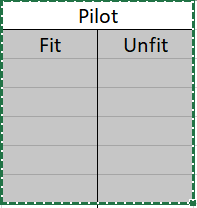
Students were asked to write personality trait words on both the Fit side, for personality traits that fit, and Unfit side, for personality traits that were Unfit. I kept students engaged by randomly calling on students and asking them to give me a word from Fit or Unfit by yelling out “Fit!” or “Unfit!”. I specifically targeted bored looking students to give them a jolt to pay attention again.
With this exercise, I last asked students to finish up the writing assignment from before. Where they only started by writing the job they want and significance, they finished by writing about why they are a good fit for their jobs. With that, class was over and the writings were to be collected the next time.
Time Management and Organizational Activities.
Time limits were set as per the teaching plan, but with the shortening of classes, the base time schedule was like this: 30 minutes introduction and lecture (word list), 10 minute writing, 20 minute lecture and group work (Jobs and Personality charts), 5 minute writing, 5 minute review. All times were adjusted based on each class’ needs but were mostly kept by a timer.
Organizational Activities were mostly that of finding ways to describe job words and their activities (by brainstorming and semi-charades), and the personality fit-unfit chart was a fast brainstorming exercise where all students were called on it a very short period of time forcing students to think fast. These were done multiple times to help struggling students learn how to think.
Classroom Management
As always the biggest issue is keeping students engaged and attentive. I once again used the clapping activity to keep all the students on the same pace. I also made sure to address students directly whether it be them doing well (positive reinforcement) or if they are being disruptive or inattentive (negative feedback). I also started making students repeat words and phrases that are important, but by changing the tone, volume, and voice in order to make that fun and interactive. It seemed to work for the most part, but it can be certain if every student was participating.
Problem Solving with Teaching
Issues with student understanding is inevitable since 6 different leveled classes had to have different approaches. The biggest issue is the understanding of instruction. In doing so, I not only slowed down speech, but also repeated sentences many times, as well as walking around as students were working in order to help them with what they don’t understand. Since this is language teaching, other forms may not be as effective since there is nothing better than simply being direct. I did not have other problems with teaching, but with the 6 times I have to teach each lesson, I could see how the teaching got refined as I found what worked and didn’t work. Perhaps practice is the best for problem solving while teaching.

 Brian's Indonesia SEAMEO